
Why Games and Pastimes Matter in Assisted Living
Games and pastimes give assisted living residents enjoyable ways to stay engaged, connected, and mentally active. In Girard, PA, familiar activities can also help residents maintain daily routines, build friendships, and spend meaningful time indoors during cold, rainy, or snowy weather.
Activities do not need to be complicated or competitive. The most successful options are usually easy to explain, adaptable to different abilities, and enjoyable even when played at a relaxed pace. A resident may prefer a quiet puzzle one day and a lively group game the next.
Pastimes can support several areas of well-being:
- Conversation and social connection
- Hand coordination and gentle movement
- Memory and problem-solving
- Personal expression and creativity
- Sense of purpose and routine
- Comfort through familiar hobbies
The goal is participation, not performance. Residents should be able to observe, join partway through, or modify an activity without feeling pressured.
Which card games are popular with older adults?
Simple card games remain popular because they are familiar, portable, and easy to adapt. Residents may enjoy solitaire, rummy, Go Fish, Old Maid, Uno-style matching games, or games that involve sorting cards by color, number, or suit.
For group play, rules should be reviewed before beginning. Large-print cards can help residents with reduced vision, while oversized cards may be easier for people with arthritis or limited hand strength. A card holder can reduce the need to grip several cards at once.
Card games can also encourage conversation. Players often share memories about games played with family members, school friends, or neighbors. These stories can be as valuable as the game itself.
Competitive games should be chosen thoughtfully. Some residents enjoy keeping score, while others prefer cooperative play or a casual format in which points are not emphasized.
What board games work well in assisted living?
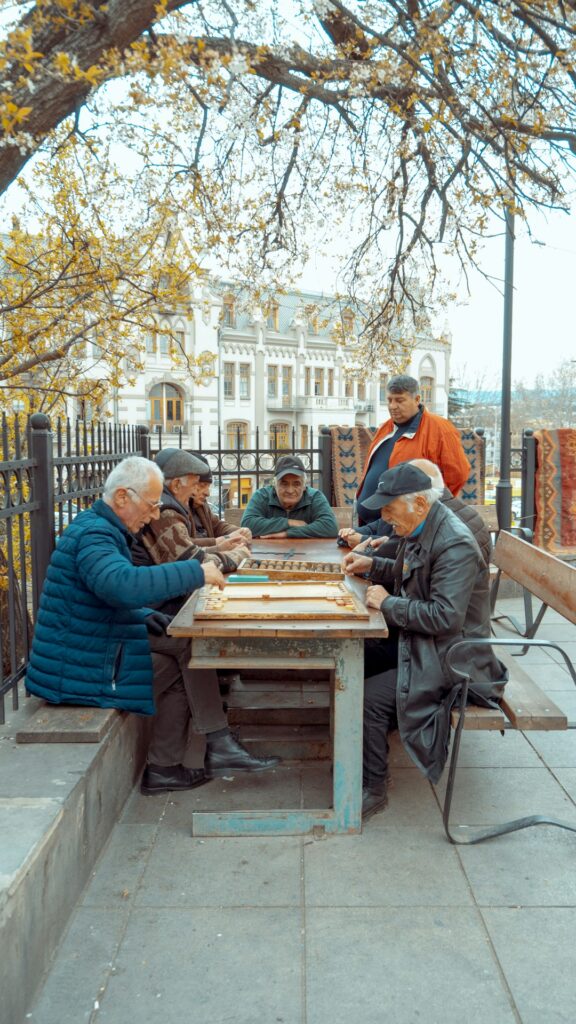
Board games are most successful when the board, pieces, and instructions are easy to see and manage. Checkers, dominoes, simple matching games, word games, and familiar dice games are often suitable choices.
Games with too many small pieces may be frustrating for residents with vision changes, tremors, or difficulty with fine motor skills. A tray, shallow container, or contrasting-colored playing surface can make pieces easier to locate.
Helpful adaptations include:
- Using large-print instructions
- Limiting the number of players
- Choosing brightly colored pieces
- Placing the board on a stable, uncluttered table
- Reading instructions aloud
- Allowing extra time between turns
- Replacing complicated scoring with a cooperative goal
Some residents may enjoy being the person who explains the rules, organizes the pieces, or keeps track of turns. Taking a leadership role can help support confidence and a sense of usefulness.
Are puzzles and word activities good choices?
Puzzles can provide quiet concentration without requiring a resident to compete with others. Jigsaw puzzles with larger pieces, word searches, crossword puzzles, picture puzzles, and sorting activities can be adjusted to many ability levels.
Large-piece puzzles are often more comfortable for people with limited dexterity. A puzzle mat can make it easier to move an unfinished puzzle without disturbing it. For residents who tire easily, completing a few pieces at a time may be more enjoyable than finishing the entire puzzle in one sitting.
Word activities may include:
- Naming items in a familiar category
- Finishing well-known sayings
- Identifying songs from short musical clues
- Creating words from selected letters
- Answering gentle trivia questions
- Discussing the meaning of common expressions

These activities should not be treated as tests. A resident who cannot remember an answer immediately may still enjoy the conversation and clues that follow.
What creative pastimes can residents enjoy?
Creative activities offer residents a way to express preferences, memories, and personality. Drawing, coloring, painting, seasonal crafts, simple woodworking projects, flower arranging, and collage-making can all be adapted for assisted living settings.
Adult coloring pages with bold outlines may be easier to use than highly detailed designs. Foam brushes, large-handled tools, and lightweight materials can help residents who have limited grip strength. Projects should avoid sharp tools, toxic materials, loose small parts, or strong odors unless appropriate supervision and safety measures are in place.
Crafts can also reflect the seasons. During winter, residents may enjoy paper snowflakes, greeting cards, fabric projects, or indoor plant care. In warmer months, arranging flowers, tending container plants, or observing birds through a window may provide a connection to outdoor life without requiring long periods outside.
The finished project matters less than the experience of making it. Displaying artwork can give residents recognition and create natural conversation among neighbors and visitors.
How can music become a favorite pastime?
Music is often meaningful because it connects with memory, emotion, and personal history. Residents may enjoy listening to familiar songs, singing along, tapping rhythm instruments, or discussing musicians and dances from earlier years.
A music activity can be as simple as choosing several songs around a theme, such as school days, seasonal celebrations, work memories, or favorite family gatherings. Residents may also enjoy identifying songs, completing familiar lyrics, or sharing the story behind a favorite piece.
Volume should remain comfortable, especially for residents who use hearing devices or become overwhelmed by loud sounds. Participation should never require singing. Listening, tapping, or requesting a song can be equally meaningful.
What activities encourage gentle movement?
Movement-based pastimes can help break up long periods of sitting. Chair exercises, balloon volleyball, beanbag toss, scarf movement, indoor bowling with lightweight equipment, and simple stretching routines may be appropriate for many residents.
Activities should match each person’s mobility, balance, endurance, and medical guidance. A resident may participate by moving only the hands, tapping the feet, or passing an object rather than standing or walking.
In a community with changing weather, indoor movement activities can be especially useful. Clear pathways, stable chairs, good lighting, and enough space between participants help reduce hazards. Staff or caregivers should provide the level of assistance required by each resident’s care plan.
How can pastimes include residents with memory loss?
Residents with memory loss can enjoy games and hobbies when the activity is simplified and presented without pressure. Familiar routines, music, sorting tasks, folding, matching colors, and looking through photographs may be more comfortable than games with complex rules.
Instructions should be brief and offered one step at a time. Demonstrating the activity is often more effective than explaining several rules at once. It may help to use visual cues, labeled containers, or a finished example.
A resident does not need to remember the name of a game or complete every step to benefit. Pleasant interaction, sensory enjoyment, and a feeling of belonging are meaningful outcomes.
Avoid correcting every mistake. Gentle encouragement and redirection usually create a more positive experience than focusing on accuracy.
How should residents choose activities that fit them?
The best pastime is usually the one that matches a resident’s interests, abilities, energy level, and personal history. Someone who enjoyed gardening may prefer plant care or flower arranging. A former card player may enjoy a familiar hand of cards, while another resident may prefer music, conversation, or a quiet puzzle.
Preferences can change from day to day. Pain, fatigue, medication effects, vision changes, hearing difficulty, and mood may affect participation. Offering two or three choices is often better than assuming a resident will enjoy a particular activity.
Games and hobbies are most beneficial when they preserve dignity, encourage connection, and leave room for personal choice. In assisted living, a meaningful pastime may be a lively group game, a few minutes of music, a shared puzzle, or a quiet activity completed at a comfortable pace.
